Best Marketing Strategies for Columbus-Based Businesses in 2025

Columbus is not just getting busier; it’s growing fast: the metro hit 2,225,377 residents by the end of 2024 after adding 30,348 new people in one year, which is exactly why competition for attention, clicks, and trust feels tighter in 2025.
With steady population growth, expanding suburbs, and a strong mix of service-based and professional industries, Columbus has become a highly active local market where visibility and trust matter more than ever.
This article explores practical approaches influenced by local search behavior, neighborhood-level competition, and the way Columbus consumers discover, evaluate, and choose businesses.
Why Marketing in Columbus Requires a Localized Strategy in 2025
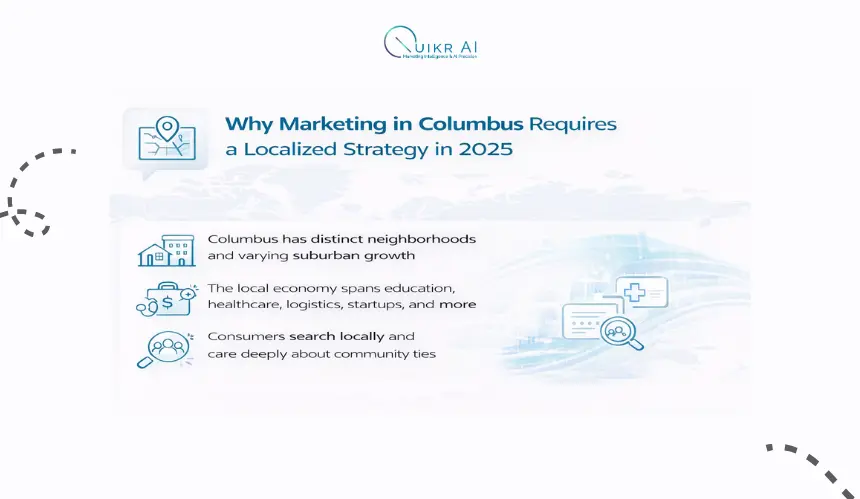
Columbus businesses operate in a market shaped by rapid expansion, shifting population patterns, and a blend of long-established neighborhoods and fast-growing suburbs. Marketing decisions in 2025 must account for how these local dynamics influence visibility, competition, and customer expectations across Central Ohio.
How Columbus’s Economic Mix Shapes Marketing Priorities
Columbus is driven by a diverse economy that includes education, healthcare, logistics, construction, professional services, and a growing startup ecosystem.
The presence of The Ohio State University creates steady demand cycles, seasonal population shifts, and distinct audience segments. Businesses must align messaging, channels, and timing with these economic drivers to stay relevant in local searches and purchasing decisions.
Why Neighborhood-Level Competition Matters in Columbus
Competition in Columbus often varies by area rather than citywide. Businesses in Short North, Downtown, Dublin, Westerville, and Grove City face different audience behaviors, pricing sensitivity, and service expectations.
Marketing strategies that account for neighborhood intent signals, proximity-based searches, and localized branding perform better than broad city-level targeting.
What Central Ohio Consumers Expect From Local Businesses
Columbus consumers rely heavily on search results, online reviews, and location credibility when choosing businesses. Trust, responsiveness, and community presence play a major role in decision-making.
Businesses that reflect local familiarity, clear service areas, and consistent reputation signals tend to earn stronger engagement and higher conversion rates across Central Ohio.
Understanding Customer Behavior and Search Patterns
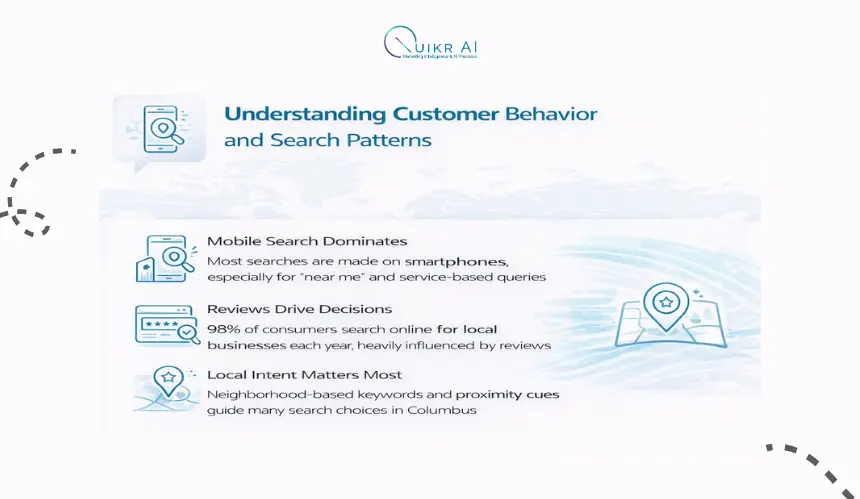
To market effectively in Columbus in 2025, businesses need a clear understanding of how local customers search, compare, and make decisions. Search behavior across Central Ohio is shaped by mobile usage, neighborhood intent, and a strong dependence on trust signals, all of which directly influence visibility and conversions.
Did you know? BrightLocal’s Local Consumer Review Survey 2023 found that 98% of consumers used the internet to find information about local businesses in the last year.
Why Reviews Influence Buying Decisions
Online reviews play a decisive role in customer behavior. Searchers frequently compare multiple businesses before making contact, using ratings, review freshness, and response tone as quality indicators. Businesses with consistent feedback and active review engagement tend to attract higher trust and stronger click-through rates.
How Seasonal and Local Events Affect Demand in Columbus
Demand patterns in Columbus shift noticeably throughout the year due to academic calendars, weather conditions, and city-wide events. The Ohio State University influences housing turnover, dining traffic, transportation needs, and service demand during move-in periods, graduation weeks, and football seasons.
Interesting: Ohio State reported total enrollment of 66,901 for the 2024–25 academic year.
This helps explain why move-in windows, graduation weeks, and campus-driven weekends can noticeably shift demand and search activity across Columbus.
Weather in Ohio creates clear intent signals as well, with winter freezes driving urgent plumbing and heating searches, spring storms increasing roofing and exterior repair demand, and summer heat pushing higher activity for cooling, landscaping, and home improvement services.
Businesses that adjust timing, messaging, and promotions around these local cycles tend to appear more relevant when intent is highest.
Point to ponder: Ohio Stadium’s seating capacity is 102,780, so home football Saturdays can create predictable surges in local interest around dining, parking, rides, and nearby services tied to game-day traffic flow.
What Proximity and Neighborhood Relevance Signal to Searchers
Proximity plays a critical role in how Columbus customers evaluate businesses during the search process. Users often look for confirmation that a company actively serves their specific area, not just the city as a whole.
References to familiar neighborhoods, nearby communities, and realistic service coverage reduce hesitation and increase trust.
When businesses clearly communicate local accessibility and response expectations, searchers are more likely to engage, especially for time-sensitive or service-based decisions.
Local SEO Strategies That Drive Visibility in Columbus SERPs
Did you know? BrightLocal’s Consumer Search Behavior research found that 85% of consumers consider the presence of contact information and opening hours an important factor when researching local businesses.
Search visibility in Columbus is strongly influenced by proximity, relevance, and local trust signals. As competition continues to grow across Central Ohio in 2025, businesses that structure their local SEO around Columbus-specific intent patterns are more likely to appear when customers are ready to act.
How Google Business Profiles Influence Local Rankings
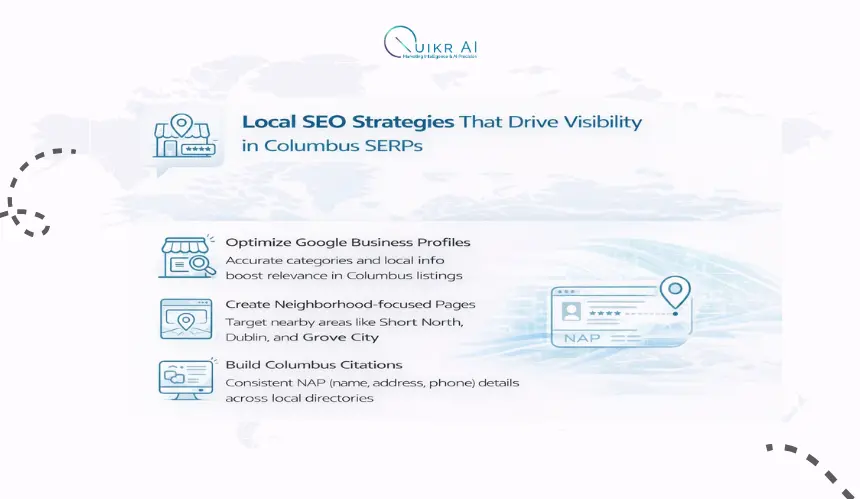
For many searches, Google Business Profiles are the first interaction point between a business and a potential customer. Accurate categories, consistent operating hours, service descriptions, and location signals help Google understand relevance for nearby searches.
Profiles that reflect real service areas within Columbus neighborhoods tend to perform better in map results and local listings.
Why Neighborhood-level Pages Improve Columbus Search Visibility
Columbus's search behavior often includes neighborhood cues rather than just city names. Creating pages that clearly address areas like Short North, Clintonville, Dublin, or Grove City helps align content with proximity-based intent. These pages signal geographic relevance and make it easier for search engines to match businesses with nearby users.
How Local Citations Strengthen Authority Across Central Ohio
Citations on Columbus-focused directories, chambers of commerce, and regional platforms reinforce business legitimacy. Consistent name, address, and phone information across local listings helps search engines confirm trustworthiness. This consistency plays a key role in maintaining stable rankings within the Columbus local results.
A trusted SEO company in Columbus can help streamline Google Business Profile optimization, neighborhood targeting, and authority signals that influence map rankings and local results.
Content Marketing That Resonates With Audiences
Content marketing is most effective when it helps people understand their options, reduces uncertainty, and answers real questions clearly.
In 2025, strong content focuses on usefulness and clarity rather than promotion, guiding readers through decisions with information they can trust.
Important:HubSpot’s State of Marketing Report (2025) notes that in 2024, the top marketing channels driving ROI for B2B brands were (1) website, blog, and SEO efforts, followed by (2) paid social media content.
What Types of Content Audiences Engage with Most
Audiences engage more with content that explains processes, sets expectations, and addresses common concerns. Practical guides, comparison-based insights, and educational breakdowns perform well because they help readers make sense of complex decisions.
Readers tend to engage with content that mirrors their daily environment and local challenges. For example, content that explains seasonal service timing in Columbus or outlines what to expect during busy local periods often holds attention longer.
Community-Aware Storytelling That Builds Trust
Storytelling becomes more effective when it reflects familiar situations and shared experiences. Referencing recognizable contexts, such as neighborhood-driven demand or city-wide events in Columbus, helps content feel grounded and relatable. This approach builds trust by showing awareness of the environment readers operate within.
Event-Based and Seasonal Content Tied to Central Ohio
Beyond campus-driven activity, several well-known Columbus events consistently influence local interest and search behavior. The Ohio State Fair, held annually at the Ohio Expo Center, draws large crowds from across Central Ohio and neighboring regions, increasing attention around dining options, parking, short-term accommodations, and nearby services during its run.
Another major moment is Red, White & Boom!, the city’s Independence Day celebration, which temporarily reshapes traffic patterns and boosts demand for transportation, event services, and last-minute local searches in and around Downtown Columbus.
Content that reflects these types of city-wide occasions feels timely and grounded, helping audiences find relevant information during periods of heightened activity and planning.
Paid Advertising Channels That Perform Best for Columbus Businesses
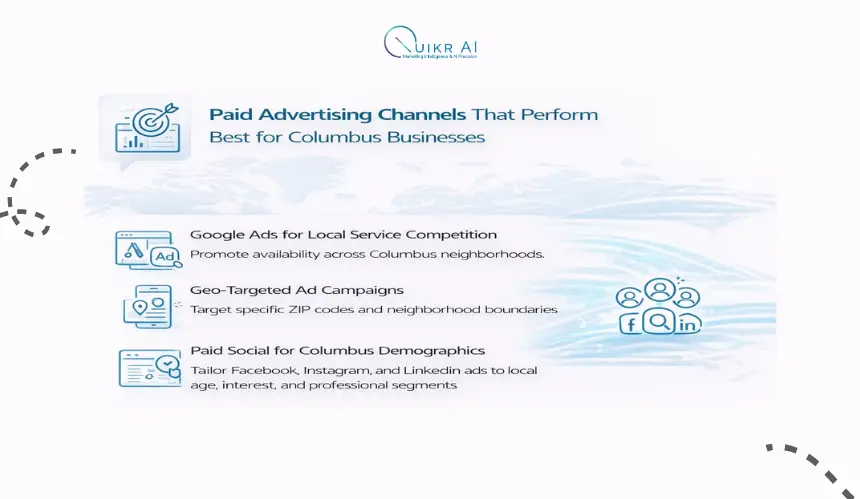
Paid advertising in Columbus works best when campaigns are structured around local intent, realistic competition levels, and audience behavior within Central Ohio.
In 2025, success depends less on broad reach and more on precision, relevance, and timing across the right platforms.
Local intent is strongly action-driven:Google found that 76% of smartphone local searchers visit a business within 24 hours, and 28% end up purchasing, which is why well-timed search ads can perform so well in Columbus.
Google Ads for Local Service Competition
Google Ads remain one of the most effective channels for reaching Columbus customers who are ready to act. Local service searches often signal immediate intent, making search ads valuable when campaigns are tightly aligned with service areas, operating hours, and demand cycles. Ads that reference availability, proximity, and clear next steps tend to perform better in competitive Columbus search results.
Geo-Targeted Ad Campaigns
Social advertising performs strongest when targeting is refined by location, interests, and behavior. In Columbus, campaigns built around ZIP codes and neighborhood boundaries allow businesses to focus on specific areas rather than spreading budgets too thin.
This level of targeting improves relevance, reduces wasted impressions, and helps ads feel timely and aligned with local intent instead of appearing generic or intrusive.
Paid Social for Columbus Demographics (Facebook, Instagram, LinkedIn)
Paid social platforms play a complementary role in reaching audiences based on age, interests, and professional background. Facebook remains effective for community-driven engagement and service discovery.
Instagram performs well for visually oriented businesses and lifestyle-focused messaging, and LinkedIn supports targeting for B2B, healthcare, and professional services common across Central Ohio.
Using platform-specific messaging allows campaigns to align with how different Columbus demographics consume and respond to ads.
Social Media Marketing in Columbus’s Community-Driven Environment
Social media plays a different role in Columbus compared to purely awareness-driven markets. Engagement is shaped by community visibility, familiarity, and how consistently a business shows up in local conversations.
In 2025, performance is tied more to relevance and interaction than to posting frequency alone, which is why thoughtful social media management has become essential for maintaining trust and consistency.
Interesting fact:Responsiveness is a trust signal. Sprout Social found that nearly three-quarters of consumers expect a reply within 24 hours, which makes two-way engagement more valuable than repeated promotional posts.
Platform Selection Based on Columbus Demographics
Platform choice in Columbus should reflect how audiences naturally engage rather than where ads perform best.
Facebook remains central for community groups and local discussions, Instagram supports visual storytelling and brand familiarity, and LinkedIn fosters professional credibility through thought leadership and updates.
Selecting platforms based on organic user behavior helps businesses build recognition without relying on paid exposure.
Community Interaction vs Promotional Posting
Columbus audiences respond more positively to interaction than repeated promotion. Content that acknowledges comments, responds to questions, and participates in local conversations builds familiarity over time. Businesses that treat social media as a two-way channel tend to earn stronger engagement than those focused only on announcements or offers.
Leveraging Local Events, Causes, and Partnerships
Social content tied to local events or causes feels more natural and timely. Highlighting participation in community initiatives, seasonal happenings, or neighborhood partnerships allows businesses to stay visible without overt promotion. This approach helps social posts align with what people are already talking about.
Collaborations with Columbus-based creators and Pages
Working with locally recognized creators, community pages, or niche influencers helps extend reach within trusted networks. These collaborations often feel more authentic because they reflect shared audiences and familiar voices. When partnerships align with brand values and local relevance, they support credibility and organic engagement.
Marketing Automation and AI Tools Columbus Businesses Are Adopting in 2025
AI-driven tools are increasingly shaping how businesses manage visibility, efficiency, and decision-making. In 2025, the focus is on using automation and artificial intelligence to understand search behavior, respond faster to prospects, and improve performance across digital channels, especially in competitive local markets like Columbus.
Did you know? More than 60% of marketers are using generative AI, which supports using AI-led analysis to improve decisions across content, ads, and local performance
CRM Automation for Local Lead Management
CRM platforms with built-in automation help businesses track inquiries, organize customer data, and maintain timely communication. Automated workflows reduce response delays and ensure leads are handled consistently, allowing teams to focus on higher-value interactions while maintaining accuracy in follow-ups.
AI-Driven Email and Follow-Ups
Email systems powered by AI can adapt messaging based on user actions, timing, and engagement patterns. These tools help businesses send relevant follow-ups after form submissions or inquiries, improving open rates and response quality.
When email insights are connected to search performance data, messaging becomes more aligned with what users are actively looking for.
Chatbots and Scheduling for Columbus Service Businesses
Chatbots and automated scheduling tools improve availability by capturing inquiries outside business hours. For service-based businesses in Columbus, these tools help answer common questions, confirm service coverage, and book appointments efficiently, reducing friction in the early decision-making stage.
Data-Driven Insights for Local Campaign Optimization
AI analytics tools help businesses evaluate which pages, keywords, and campaigns are driving meaningful engagement. By analyzing search trends, on-site behavior, and conversion data, businesses can refine content and technical performance.
This is where AI SEO optimization plays a critical role, helping translate data into actionable improvements that strengthen local search visibility and user experience.
How Marketing Strategies Differ by Business Type in Columbus
While core marketing principles stay consistent, their execution changes by industry in Columbus because buying cycles, urgency, and “trust thresholds” are not the same across sectors.
Service-Based Businesses (Home Services, Healthcare, Contractors)
Columbus added 30,348 residents in a single year (year-end 2024), which increases demand while also tightening local competition.
For service businesses, the highest-return strategy is to win high-intent searches and remove friction fast: prioritize Google Business Profile accuracy, service-area clarity by neighborhood, and consistent review generation with timely responses.
Pair that with tightly scoped paid search that matches real coverage areas and hours, so budget is not wasted outside the service radius. Finally, add lead-speed systems (missed-call text-back, automated booking prompts, and follow-up sequences) to convert urgent inquiries before they go to the next listing.
Retail, Dining, and Hospitality Brands
The Ohio State Fair drew 1,006,228 attendees in 2023, and Columbus routinely experiences similar demand spikes around major local events.
For retail and hospitality, the most effective strategy is event-timed visibility: publish short, local landing content that matches what visitors search during peak weeks (hours, parking, specials, reservations), and run geo-targeted social ads built around nearby ZIPs and “near me” intent rather than broad citywide targeting.
Use Google Maps-focused assets (photos, offers, menus/services, attributes) to win quick decisions on mobile. Promotions should be calendar-led (weekends, festivals, game-day spillover) and designed for fast action, not long education.
Professional and B2B Services
Ohio State reported total enrollment of 66,901 for the 2024–25 academic year, reinforcing Columbus as a dense talent and decision-maker market.
For professional and B2B services, the best strategy is credibility-first demand capture: publish “decision support” content (comparisons, cost/ROI explanations, compliance considerations, implementation timelines) that answers the questions buyers ask before they contact anyone.
Combine this with LinkedIn thought leadership that speaks to Central Ohio’s major business mix, plus narrowly targeted paid campaigns aimed at roles and industries rather than broad demographics. Strong proof signals matter here: case studies, structured service pages, and consistent review/reputation management that supports trust over longer sales cycles.
Startups and Growing Local Brands
Intel increased its Ohio investment to $28 billion, and the project has been positioned locally as a major long-term economic driver for the region.
For startups, the smartest strategy is efficient traction-building: lock in foundational local SEO and brand messaging early, then run selective paid campaigns tied to one clear offer (demo, consult, trial) instead of broad awareness spend.
Add lightweight PR and partnership marketing with local orgs/communities to borrow trust quickly, and build content that supports buyer confidence (use cases, FAQs, implementation steps, security/compliance notes where relevant).
The goal is to look “established” in a fast-growing market without burning budget. Consistent positioning, proof, and conversion paths beat volume.
Columbus businesses don’t lose opportunities because demand is missing; they lose them when inquiries go unanswered, follow-ups slow down, or visibility isn’t matched with real-time response. Quikr AI helps turn local traffic into real conversations by capturing leads instantly, qualifying intent, and ensuring every potential customer receives a timely, accurate response.
Frequently Asked Questions
How long does it usually take for marketing efforts to show results?
Results depend on the channels used and the competitiveness of the industry, but most businesses begin seeing noticeable traction within three to six months. Early gains often appear in visibility and engagement, while consistent lead growth typically follows with ongoing optimization.
Do small businesses need a large budget to compete digitally in 2025?
A large budget is not required to compete effectively. Many businesses achieve solid performance by prioritizing high-intent channels, targeting defined service areas, and refining messaging based on local behavior rather than increasing overall spend.
How important is brand consistency across online platforms for companies?
Brand consistency helps reinforce trust and recognition across search, social, and review platforms. When service details, tone, and visuals remain aligned, customers are more likely to feel confident during comparisons and move forward with contact or inquiries.
Can marketing strategies differ between B2B and B2C businesses?
Yes, the approach often differs based on decision cycles and audience expectations. B2B strategies typically emphasize education, credibility, and relationship-building, while B2C marketing focuses more on immediacy, convenience, and clear local signals.
How often should businesses review and update their marketing strategies?
Quarterly reviews are usually effective for assessing performance, adjusting to competition, and responding to seasonal shifts. This cadence allows businesses to stay flexible without making frequent changes that disrupt momentum.